Critical Food Systems Education High School Course
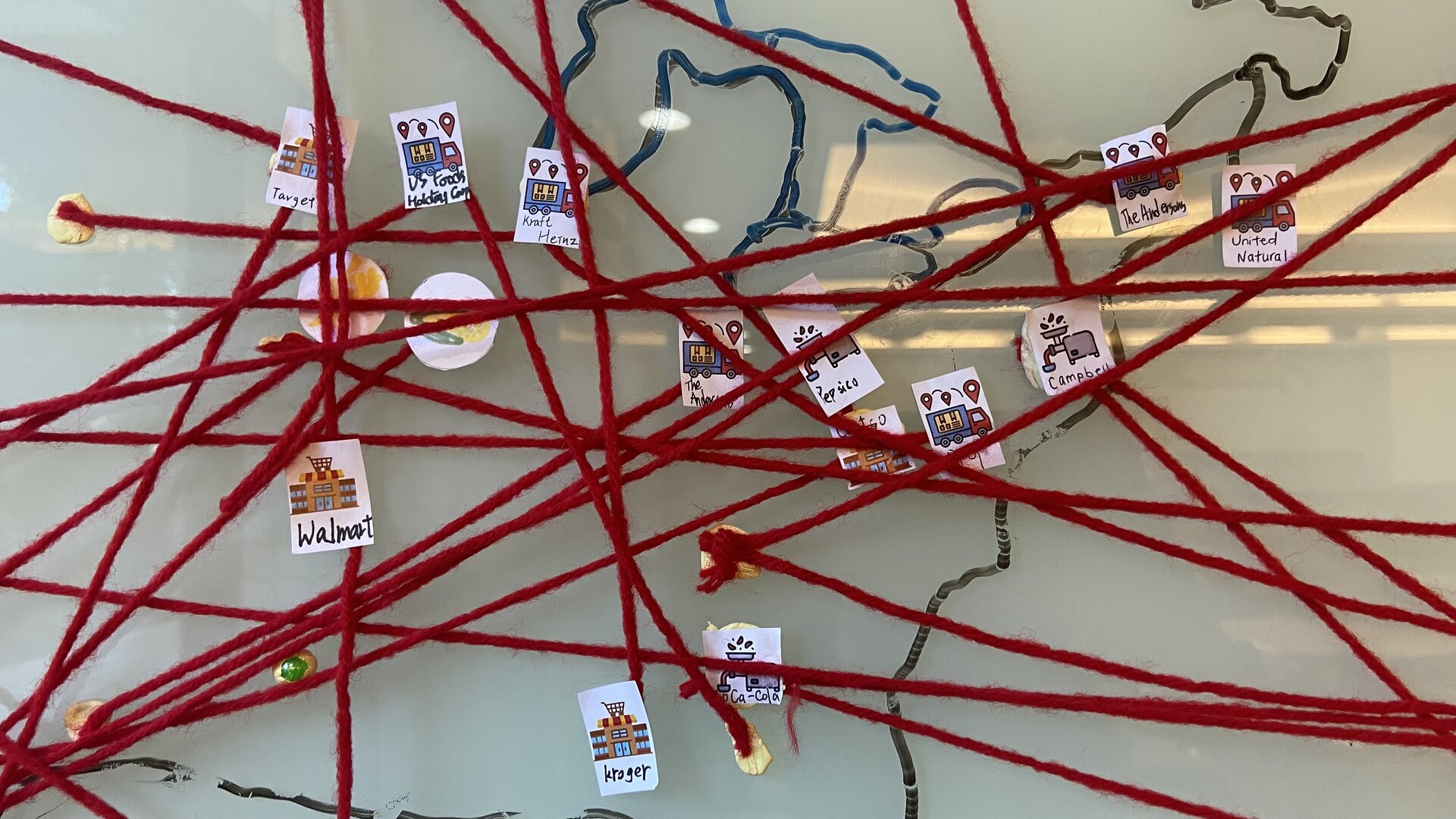

Week 2 Food Actors and Supply Chains Activity

Week 3 Supermarket Scavenger Hunt

Week 4 World Food Mapping

Week 7 Food Co-Op Tour

Week 8 Small Group Feedback Sessions
This semester-long course introduced high school seniors to food systems as interconnected social, ecological, political, and economic structures rather than isolated acts of consumption.
Units covered global supply chains, food and media, community food systems, and youth-led solutions, engaging students in mapping exercises, market fieldwork, journalism and interviewing, media analysis, soil health demonstrations, and site visits to community gardens and food cooperatives.
The course emphasized critical inquiry, research literacy, ethical reasoning, and storytelling, culminating in student presentations proposing sustainable café business plans which they presented to local café owners and practitioners for professional critique. Working in consultant-style teams, students integrated cultural context, nutrition, environmental sustainability, and business feasibility—addressing sourcing, seasonal menus, food waste, packaging, pricing, and community partnerships.
The project shifted students from abstract analysis to applied civic practice, requiring them to translate food systems research into actionable proposals and to respond to real stakeholder feedback through revision and reflection.